

TL;DR: Lead scoring tells sales who to call now and who to nurture. Without score decay, the MQL threshold becomes a seniority metric — old contacts drift over the line on tenure, not intent. This playbook covers fit gates, behavior weights, capacity-linked thresholds, and 60-day review loops that keep the queue honest.
Most teams score every lead in one pile. Fit should open the gate, while fresh behavior should carry the cross.
10 of 12 sources define scoring as fit plus behavior (Salesforce). 7 of 12 sources say scores must decay with age (AvairAI). 8 of 12 sources say thresholds must map to action and owner (GetCleed). The gap is upkeep: no top snippet shows the 60-day loop that keeps trust.
I learned this after a week of calling fit-first lists with zero fresh signals. My sheet looked full. My calls went nowhere. Which list would you call first: perfect fit asleep for 90 days, or mid-fit awake this week?
What does lead scoring decide for sales?
Lead scoring decides which leads sales calls now and which stay in nurture. The model ranks each lead by fit and behavior. Fit identifies who can buy — company size, industry, title. Behavior identifies who is buying now — pricing visits, demo requests, repeat sessions. Sales works high scores first and nurtures the rest. The score orders work; it never closes deals (Salesforce).
Lead scoring decides who sales calls now, not who looks good on paper.
Reps spend 9% of time researching, 8% prospecting, and 8% prioritizing each week (Salesforce). That is 25% of the week consumed before the first dial. Scoring reclaims it.
"Lead scoring is a method sales teams use to rank potential customers by assigning values based on their behavior, demographics, and engagement with their business." — Piyusha Pilania, Salesforce (Salesforce)
I call this The Good-on-Paper Trap. The trap keeps perfect-fit sleepers at the top while mid-fit buyers with fresh intent wait below. A library card proves access, not that anyone reads. Fit alone does the same. You need both axes to route correctly.
If you have not locked the account list yet, ideal customer profile shows how to name the companies worth scoring before you assign points.
Call the awake buyer. Park the sleeper. Check the date.
How do you pick fit and behavior inputs without guessing?

You pick inputs by comparing closed-won deals against closed-lost deals. Keep signals that separate the 2 groups. Drop signals that appear in both. Use 5 to 8 high-signal behaviors — not 30 guesses. Set weights from measured lift above 1.2, not from opinion. A signal with lift below 1.2 adds noise, not signal, and should be cut from the model (GetCleed).
Fit should open the gate, while fresh behavior should carry the cross.
Lift is the close rate for leads who triggered the signal divided by your overall close rate. If pricing page visitors close at 15% and your overall rate is 5%, lift is 3.0 — keep it and weight it heavily. If blog readers close at 5.5% against the same 5% base, lift is 1.1 — that signal is indistinguishable from noise and earns zero points. Pricing visits run 5 to 8 times more predictive than blog visits at the aggregate level (Oscom). Demographic lift runs 1.5 to 2 times over random; behavioral lift runs 2 to 3 times (Kumo). Which 3 behaviors preceded your last 10 wins?
"Fit sets the ceiling on a lead's value. It does not tell you when to act." — Sunil Hans, AvairAI (AvairAI)
| Layer | What it answers | Example inputs | Starting band |
|---|---|---|---|
| Fit gate | Who can buy | Industry, size band, region, buyer title | Pass or fail, then 0 to 20 to tier |
| Behavior | Who pays attention now | Pricing visit, demo request, case study, repeat visits | 0 to 40 with time decay |
| Recency rule | Is it happening now | Half-life 14 days high-intent, 30 days medium, zero at 90 | Decay applied, cap 25 per action |
LeadsAgent fits this split without extra work. You state hard requirements once in plain words, and LeadsAgent checks every business against your criteria, scores the matches from your preferences and the fields that exist, and puts the best ones first. Fit inputs decide who enters, while behavior inputs decide the order. Each lead keeps its evidence, so you see why it ranks high. The score ranks the list and never promises a purchase.
When you need the starting list to test inputs, finding B2B leads on Google Maps shows how to pull fresh businesses with rating, review count, and website status before you score.
Keep the model small. Prove lift. Drop decoration.
How do you set the threshold where sales takes over?
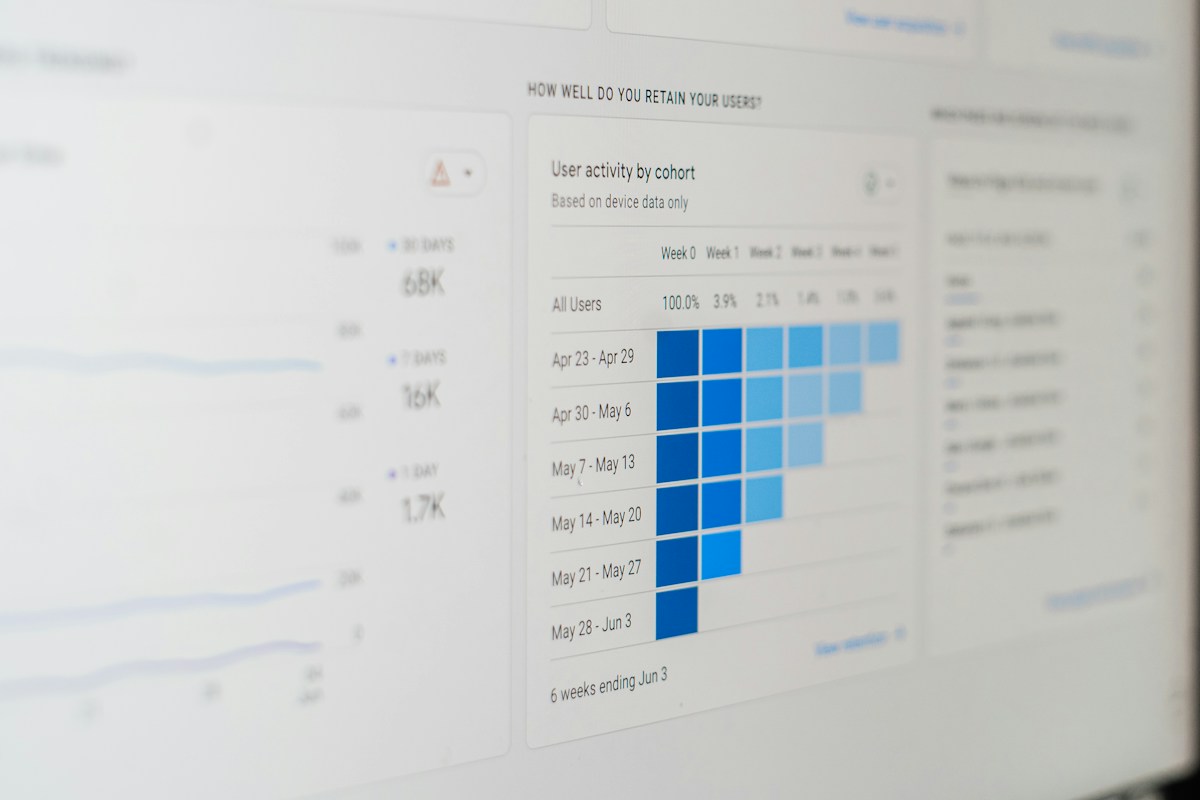
You set the threshold from rep capacity and past conversion rate. Count how many real first touches each rep runs per day. Retro-score the last 6 months of deals and find the score band where conversion jumps. Put the MQL line near both numbers. Tie each band to a named action and a named owner so the threshold produces work, not ambiguity (GetCleed).
Your threshold should match rep capacity, not a round number.
5 reps at 12 to 15 touches per day reach about 250 prospects per week at ceiling (GetCleed). Retro-scored models often show 30% to 40% of leads above the line convert to opportunities (Oscom). The 2026 panel median sits at 13% MQL to SQL; the top decile hits 31% (DigitalApplied). Where does your current line put weekly volume against those seats?
I call this The Capacity Contract. The contract names the number, the action, and the owner for each band. Like a bus with 40 seats, the threshold decides who boards now and who waits for the next ride. A line with no named owner is decoration (I have watched that bus leave half empty more than once).
Set MQL, SAL, and SQL bands in writing with response times. Route high-intent leads within 1 hour and standard MQLs the same day. If sales accepts fewer than half of MQLs, the threshold sits too low (MarCloud).
Count seats. Draw the line. Staff the door.
Why do most models lose sales trust in 90 days?
Most lead scoring models lose sales trust because scores only rise and never decay. Every behavioral event adds points permanently. A contact who visited your pricing page 10 months ago and never returned scores higher than one who visited last week — because the old contact has accumulated more events over time. The MQL threshold stops measuring intent and starts measuring database tenure. Sales calls sleepers, hears no buying signal, and stops opening the queue (AvairAI).
Without decay, the MQL threshold is a seniority metric, not an intent metric.
Most guides blame misalignment or wrong weights. The real mechanism is simpler and more structural: a scoring model without decay is a monotonically increasing function of how long a contact has been in your database. Age accumulates points. Recency does not subtract them. The fix is not a weight tweak — it is a time function applied to every behavioral signal. Halve behavior scores every 30 days or zero them at 90 days (GetCleed). Cap any single behavior at 25 points so one click cannot carry a contact to MQL alone (RevBlack). Does your hot list hold contacts with no activity in the past 60 days?
I call this The Tenure Trap. The trap rewards survival in your database, not buying intent. Consider a 3-person shop that downloaded one whitepaper in June and never returned. Without decay, that June click still votes in October. With a 30-day half-life, the vote is worth 12.5% of its original value by day 90 — and the queue reflects actual recency. The honest limit: decay requires a system that can apply date math to every score field. CRMs that store only the raw event count, not the timestamp, cannot run decay without an export and reimport step.
LeadsAgent keeps this queue honest from the start. The agent shows which fields the list holds and how full each field is, then builds one 100-point plan from your preferences and scores each lead. Hard requirements decide who enters, while the score decides the order. Each score keeps its criteria and evidence, so a rep sees the reason behind the number. A website that could not be checked stays unknown, and the agent reports a shortfall instead of relaxing a rule.
When speed is the leak after scoring, these sales follow-up email templates show how to add one new reason per touch instead of chasing with reminders.
If stale scores are your leak, try LeadsAgent for your next list and filter for verified email only before you route to sales.
Decay first. Cap second. Trust follows.
How do you keep the model honest as data changes?
You keep the model honest with a fixed review loop. Pull scored leads by band every 60 to 90 days. Check that higher bands convert better at each pipeline stage. Rerun lift per signal and cut any that fell below 1.2. Change one layer at a time and reset the threshold for current rep capacity. A model reviewed once at launch and never again will produce noise within 2 quarters (RevBlack).
A model without a quarterly review drifts into noise within 2 quarters.
Track MQL acceptance rate as the early warning signal. Teams that align on shared definitions see 25% higher lead conversion (Landbase). If sales accepts fewer than half of MQLs, the criteria no longer match what sales recognizes as qualified (MarCloud). InsideSales found 8 times higher conversion when first outreach happens within 5 minutes, measured across 55 million events (Technotrenz). How fast does your team touch a new MQL today?
"A lead scoring model is how you sort, ranking each prospect by how well they fit your ideal customer and how strongly they're behaving like a buyer, so your team spends its hours where the odds are best." — Sunil Hans, AvairAI (AvairAI)
Run the loop like scheduled maintenance, not a relaunch. Sample 50 dispositions monthly for accuracy. Tune weights quarterly against recent outcomes. Revisit ICP definition, signal list, and model architecture yearly or whenever pricing or target market shifts materially. A feedback loop nobody acts on is not a loop. When the loop spans marketing, sales, and support, the shared revenue operating model gives each handoff an owner and a clock.
For cost control around the loop, this acquisition cost checklist shows how to label paid, variable, and fully loaded CAC before you scale spend on scored leads.
When you need fewer, fitter targets to test the loop, open LeadsAgent and build a filtered list around your gate criteria and run the next 90 days from clean inputs.
Review by band. Fix one layer. Hold the line.
FAQ
Why does my threshold stop working after a quarter?
Your threshold stops working because behavior aged and the market moved. Old points still count, so tenure pushes contacts over a line built for intent. Reset decay, recut weights by recent closed-won deals, and recalibrate the threshold against current rep capacity.
Do you need predictive scoring or rules first?
Start with rules to align sales and marketing on a shared definition of qualified. Rules stay transparent and ship fast. Layer predictive scoring once you hold clean conversion history with enough volume to train a stable model.
What is a good MQL to SQL rate?
Use 13% as the 2026 median and 31% as the top decile for MQL to SQL (DigitalApplied). Industry tables show 12% to 21% as common (Landbase). If sales accepts fewer than half of MQLs passed, the threshold sits too low.
What does a scored list cost?
LeadsAgent runs $29 per month for 10,000 leads, $99 per month for 50,000, and $199 per month for 100,000 (LeadsAgent). Each plan scores from your preferences and keeps honest counts. Pick the band that fits your monthly test volume.