
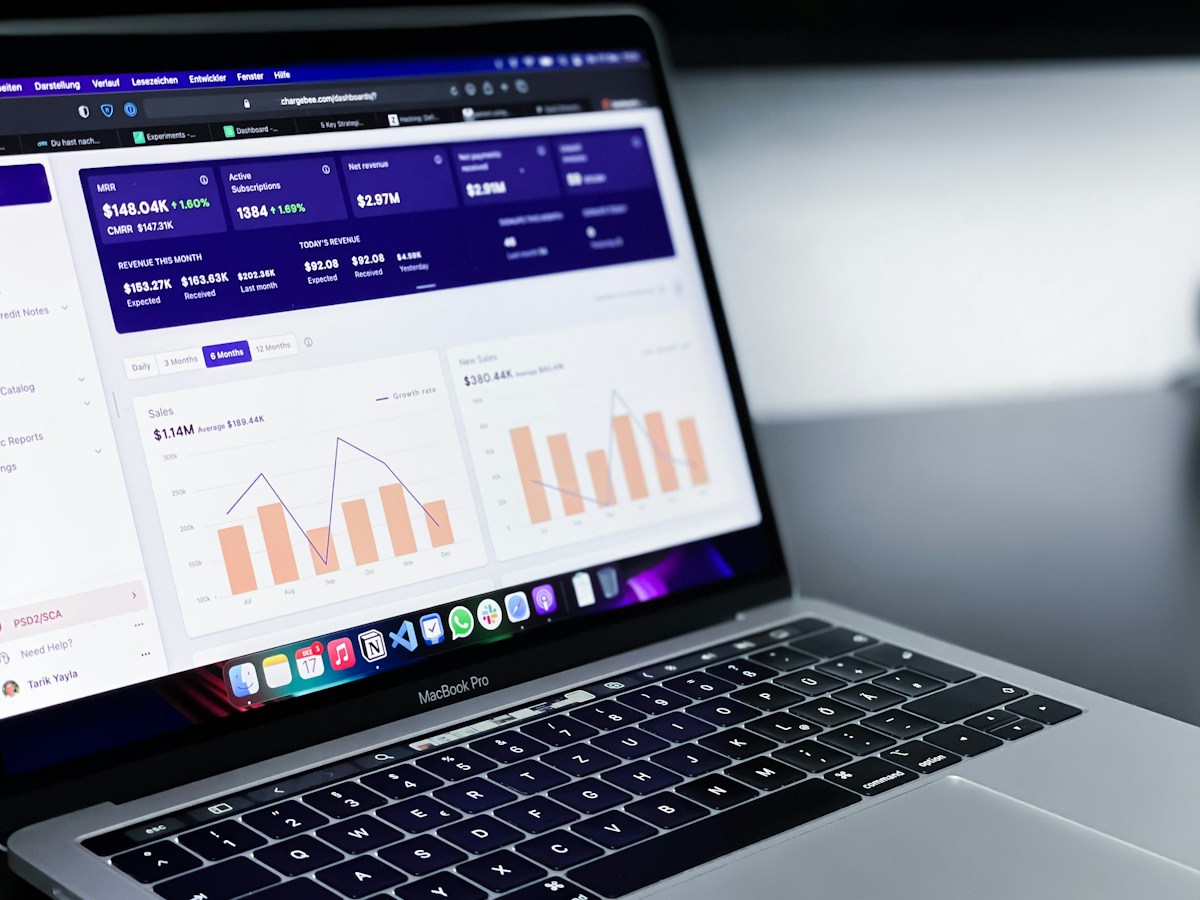
TL;DR: A sales engagement platform runs multi-channel outreach cadences and logs activity to your CRM, but pipeline survival depends on strict brake controls and clear system ownership rather than raw sequencing volume. Dedicated platforms harm teams under 5 reps by encouraging filler touches across small account lists. Small teams need deliverability guardrails, capped sends, and CRM-first workflows before purchasing enterprise multi-step automation.
Most teams buy sequencing power, but operational brakes and system ownership decide pipeline survival.
Industry guides tell sales leaders to buy automated multi-step cadences and sync everything bi-directionally (Forrester). That consensus breaks in production. When two platforms edit the same record, forecast data rots. When small teams deploy 12-step cadences to 200 accounts, reps send filler emails that burn domains (42Agency).
I learned this the painful way as a solo consultant when my outreach sheet held 40 rows, 0 replies, and 3 burned secondary domains because I bought automation before I had distribution discipline.
What does a sales engagement platform actually do?
A sales engagement platform executes and tracks outreach across email, phone, and social channels. It organizes daily task queues for sales reps. It automates multi-step cadences with specific branches for replies, bounces, and booked meetings. It writes interaction timestamps back to the central CRM. Forrester defines this category as revenue orchestration software that optimizes seller productivity (Forrester).
A sales engagement platform operates the daily cadence of outreach, not the permanent memory of the business.
Sales representatives spend less than 33% of their working hours actively selling to prospects (Instantly). Forrester expanded this category under the revenue orchestration banner in late 2024 to coordinate buyer interactions across disconnected tools (MeetRep).
Think of this operational divide as The Daily Driver vs The Library. The Daily Driver is the nimble vehicle reps steer every morning to complete outreach tasks, dial target accounts, and log touches. The Library is the quiet records archive holding customer identity, account ownership, and closed revenue history.
When organizations blur this boundary, pipeline operations deteriorate rapidly. If you force your library to act as your daily vehicle, outreach tasks stall under administrative weight. If you allow your daily vehicle to rewrite historical records in your library, the catalog collapses into chaos.
Under the hood of every platform sit 5 core mechanisms: an execution scheduler, an inbox sending engine, a prospect state machine, a reply listener, and an activity log (Inflowave). The reply listener holds the ultimate authority. It dictates whether automated messaging halts before an irritated buyer flags your corporate domain as spam.
Does a faster vehicle help if you steer toward the wrong destination? If your team lacks verified target accounts, your ideal customer profile must define the account list before you invest in automation speed. Which 200 accounts deserve your manual attention today?
How is it different from a CRM?
A CRM stores customer records, deal values, and account relationships as the single source of truth. A sales engagement platform manages outreach sequences, message templates, and daily execution queues for sales reps. The CRM records who the buyer is. The engagement platform directs what action the rep takes next. Both systems must divide duties to prevent data sync conflicts (Inflowave).
If two sales systems can edit the same record field, your pipeline forecast becomes fiction within 30 days.
Field conflict audits show that bidirectional synchronization without strict field ownership creates duplicate records, overwrites deal stages, and fills error logs for weeks before administrators notice (Unify). Practitioner communities document regular synchronization failures between Salesforce, HubSpot, and sequencing tools that leave reps working directly from unlogged personal email accounts (MeetRep).
I once watched a sales team overwrite 400 open deal stages in 12 minutes because their sequencing tool synced bidirectionally without a single master rule.
To prevent this collapse, every revenue team must document The Ownership Map. This single-page architecture defines the master system for each data field before connecting API tokens:
- The CRM owns identity, pipeline stage, deal amount, and global opt-out status.
- The engagement platform appends activity timestamps, call outcomes, and thread logs.
- Pipeline stages update only when a prospect replies positively or books a meeting, never on email opens.
Without The Ownership Map, last-write-wins logic destroys your database. A rep logs an introductory email in the engagement tool, and the platform changes an existing customer account back to 'Uncontacted Lead'. Webhooks echo internal writes back as external events. Duplicates multiply across orphaned records while reps abandon the platform to work out of personal inboxes. Adoption dies first; reporting integrity dies second.
Before signing a software contract, test the vendor with 4 specific edge cases: an active customer, an open pipeline opportunity, an opted-out contact, and an existing duplicate record. Verify that the platform halts messaging on the opted-out lead and appends activity to the correct opportunity. If the sync queue fails or requires custom code, stop the evaluation.
A cleaner system for follow-up establishes reliable rules before automation magnifies existing errors. Standard native integrations between systems like HubSpot and Salesforce work cleanly only when field-level direction rules remain rigid (AppNigma). Does your current task queue match your CRM deal stages right now?
Which features matter when reps run outreach every day?

Sales reps need deliverability protection, mailbox rotation, email verification, and automatic stop rules more than generative AI templates. A platform must cap daily email volume per mailbox to protect domain reputation. It must halt sequences immediately upon prospect replies. It must verify recipient addresses before sending touches. Teams need inbox placement monitoring rather than deceptive email open counts (Instantly).
The most valuable feature in an outreach platform is the brake pedal that prevents a damaging send.
A Belkins study analyzing 16.5 million cold emails revealed that a first follow-up increased reply rates by 49%, but a second follow-up added only 3%, and a third follow-up reduced replies by 30% while spam complaints tripled from 0.5% to 1.6% (Belkins).
"As an industry we got greedy and wrecked the outbound model. We've gone from 5 touches to get someone's attention to 20. It's hurting our profession of sales." — Mark Kosoglow, employee #1 at Outreach, via 42Agency (42Agency)
Outreach without strict volume caps resembles a heavy truck racing downhill without The Brake Pedal. Acceleration feels thrilling during vendor demonstrations. Brakes decide whether your domain reputation and sales engine survive the fiscal quarter.
B2B contact databases decay at 2.1% every month, totaling roughly 22.5% data loss each year (Instantly). When sales teams push more than 30 cold emails per mailbox per day through unauthenticated inboxes, Google and Microsoft flag the root domain within weeks (42Agency). Hard bounces must remain below 1%, and automated sequences must pause whenever bounce rates exceed 2%.
Limit email outreach to 4 steps across 10 to 14 days. Introduce a fresh perspective on step 3 instead of forwarding the initial message. If the prospect does not respond by step 4, switch to phone calls or social channels rather than forcing automated steps 5 and 6. Disabling open tracking pixels often improves deliverability because anti-spam filters penalize tracking code (Instantly). Does your dashboard report actual inbox placement, or does it mislead you with inflated open percentages?
Before you schedule outreach sequences, you need email addresses verified at the root domain: LeadsAgent visits each business website, finds the public emails, and checks deliverability before they reach your list, so your first touch reaches a person. No zero-bounce promise appears. If stale lists burn your tests, try it for your next list and enroll only rows you can trust.
When cadence guardrails operate smoothly, our follow-up email playbook shows when to send, when to switch thread, and when to stop chasing.
How do you choose a platform without breaking follow-up?
Select an outreach platform based on team head count, administrative capacity, and data governance requirements. Teams with fewer than 5 reps should use lightweight, CRM-native tools with daily volume caps. Organizations with more than 5 reps require dedicated administrative oversight, suppression lists, and field ownership mapping. Evaluate every vendor by running 4 complex edge cases before signing an annual contract (UseSalesPitch).
Below 5 sales reps, buying an enterprise sequencing platform produces negative pipeline returns.
Belkins benchmark data shows that small firms with 0 to 10 employees achieve 0.72% response rates compared to 0.22% for enterprises with over 10,000 employees, with founders generating 0.57% reply rates versus 0.32% for enterprise sales executives (Belkins). Sales enablement analyses confirm that the software threshold for dedicated platforms begins only after teams reach 5 to 8 dedicated reps (UseSalesPitch).
"They're generally the same. It's going to come down to pricing, past experience, admin experience." — u/-EVildoer via 42Agency (42Agency)
Consider a 3-person sales team targeting 200 high-priority accounts without a dedicated RevOps administrator. When leadership buys a complex 9-step cadence tool, reps face an empty pipeline queue within 2 weeks. To keep the software running, reps invent 6 generic filler follow-ups to stretch cadences across limited accounts. The result is rapid domain burning and irritated buyers.
Early-stage sales teams win on disciplined focus, not sequencing volume. Run a compact founder-led motion: 3 personalized emails sent on Day 0, Day 3, and Day 10 across a multi-channel cadence incorporating phone calls and LinkedIn touches. Send batches to cohorts of 50 or fewer decision-makers at companies with 11 to 50 employees. Graduate to dedicated platforms only after managing 40 concurrent conversations or hiring 5 to 8 full-time reps with dedicated administrative support.
| Team | Platform Selection | Ownership Test | Cost Signal |
|---|---|---|---|
| Under 5 reps, founder-led | CRM-native sequences or flat-fee sender | 50-contact cohort, pause on reply | Entry bands near $29 to $49 per seat |
| 5 to 20 reps, dedicated admin | Dedicated platform with send caps and rotation | 4-record edge test, error queue check | Mid bands near $75 to $125 per seat |
| 20+ reps, RevOps team | Enterprise orchestration with strict governance | Field map, duplicate and opt-out validation | Enterprise bands above $100 per seat |
A disciplined cadence demands high-quality prospective accounts: LeadsAgent finds matching local businesses on Google Maps from one request, visits each website, and delivers one ranked list, so a small team starts from fresh rows. If your next 50 accounts lack contacts, start your first list here and run the three-touch test on rows you can trust.
Targeting precision dictates conversion rates, so buyer roles that shape deals outlines which executive persona to contact first.
How do you measure whether the platform earns its cost?
Measure sales engagement software by tracking positive replies, meetings held, and pipeline generated per 100 targeted contacts. Exclude email open rates from success dashboards because automated security filters generate false opens. Compare performance across cohorts with identical list criteria and messaging angles. Calculate software payback against closed revenue rather than sent messages (Belkins).
Positive replies and qualified pipeline per 100 contacts provide the only valid measurement of outbound software return.
Belkins shifted its performance benchmarks after documenting historical conversion rates of 6.8% in 2023 and 5.8% in 2024 against unique openers, dropping to a realistic 0.45% in 2025 when measured against total outbound sends (Belkins).
"We made this shift because open rate data became unreliable once we stopped tracking it — the rate tracking pixel was hurting deliverability throughout the industry in 2024, whereas total sends are a consistent baseline." — Belkins team (Belkins)
Many sales reporting suites mask declining performance with a hidden denominator swap. Blended open metrics aggregate Apple privacy prefetch triggers with anti-spam security scans, giving revenue leaders an illusion of buyer interest (Instantly). To discover real performance, execute a 7-day test with tracking pixels disabled and evaluate reps on qualified replies per 100 accounts reached.
Track 4 core metrics for each audience cohort:
- Delivery rate: Verified deliveries divided by total contacts (target >98%, bounce rate under 2%).
- Reply rate: Total replies divided by total contacts reached (benchmark 1% to 3%).
- Meeting rate: Completed qualification meetings divided by 100 contacts (benchmark 0.5% to 1.5%).
- Pipeline value: New sales opportunities generated relative to monthly software seat licensing.
Establishing a lead scoring model sales trusts defines the qualification threshold before leads transition from sequences to pipeline opportunities.
When software seat costs expand across growing teams, analyzing how payback judges scale ensures your customer acquisition costs stay profitable.
FAQ
When should a two-person agency buy a sales engagement platform?
A two-person agency should buy only after a 3-touch manual motion books meetings. The team runs Day 0, Day 3, and Day 10 touches to 50 founders first. The agency buys when 40 active threads begin dropping follow-up steps.
Who should own CRM and platform fields when both systems sync?
The CRM must own contact identity, deal stage, and opt-out records. The sales engagement platform appends activity logs and updates pipeline stages only on replies and booked meetings. Write strict field direction rules and inspect the sync error queue after 7 days.
How much does LeadsAgent cost for a team that needs cleaner lists?
LeadsAgent costs $29 per month for 10,000 leads, $99 per month for 50,000 leads, and $199 per month for 100,000 leads. Each plan finds Maps businesses, checks public emails, and delivers a ranked list.
Do open rates tell you if sequences work?
Open rates do not tell you if sequences work. Security scanners and mail privacy systems trigger false opens. Sales teams must evaluate reply volume, positive sentiment share, and meetings booked per 100 targeted accounts.