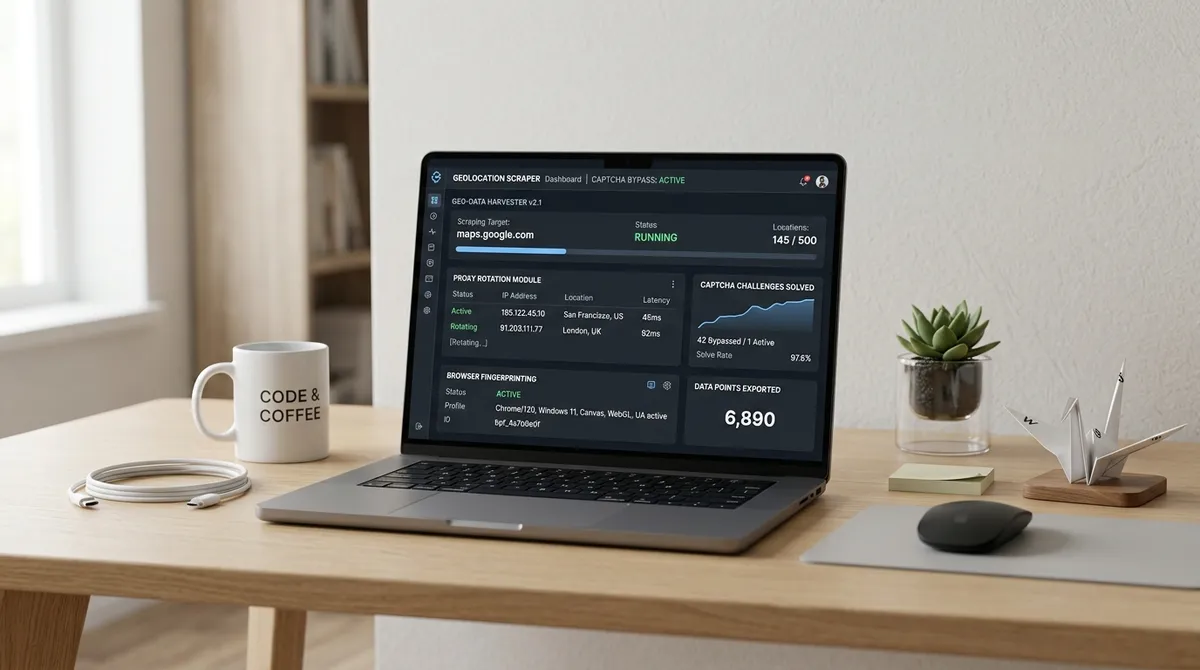
Most salespeople and agency owners underestimate Google Maps. They think of it as something you check when you need directions. But if you are doing local B2B outreach, Google Maps is quietly the best free lead database on the planet — updated in real time by the business owners themselves.
This guide covers how to pull that data reliably, what you end up with, and a few things nobody tells you about list quality.
What is Google Maps Lead Extraction?
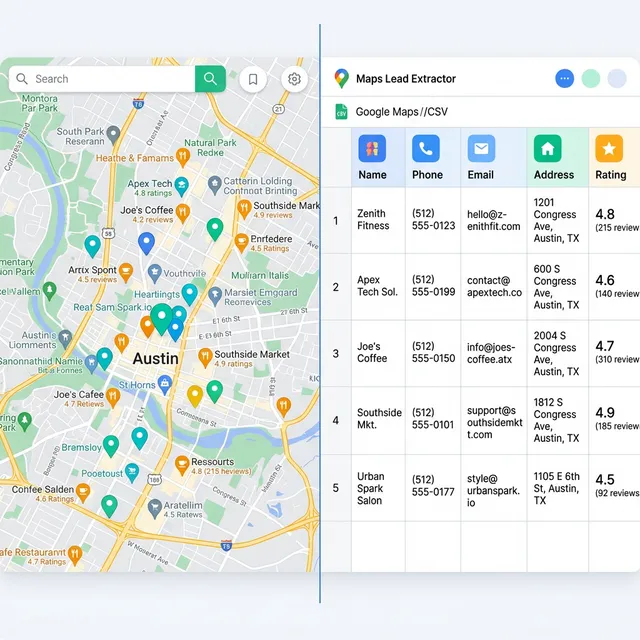
Google Maps lead extraction is the automated process of gathering real-time, verified business contact information directly from local maps listings. By using AI-powered tools like LeadsAgent, sales teams can bypass stale purchased lists and instantly generate highly targeted spreadsheets containing names, phones, and emails of operational businesses.
Why Google Maps beats every paid list
If you have ever bought a lead list, you know the pain. The data is months old, the emails bounce, and you have paid $300 for contacts that half your competitors already bought and emailed.
Google Maps does not have that problem. Every record is publicly visible and maintained by the business itself. A plumber in Austin who just opened last month appears on Google Maps — he will not show up on a 6-month-old database you purchased.
Beyond freshness, the data is genuinely useful:
- Phone number (usually a direct line, not a front desk)
- Website URL — your starting point for finding the owner's email
- Star rating and review count — an instant signal of how established and reachable the business is
- Business category — so you can filter down to exactly what you need
The thing that makes all of this usable at scale, though, is having a way to extract it without spending your afternoon copying and pasting.
The manual approach and why it fails at scale
I have talked to agencies who built their entire early pipeline by hand. One person, scrolling through Google Maps, copying business names and phone numbers into a Google Sheet. It works — slowly.
At two minutes per listing, fifty leads takes an hour and forty minutes. And you still have not looked up their email addresses.
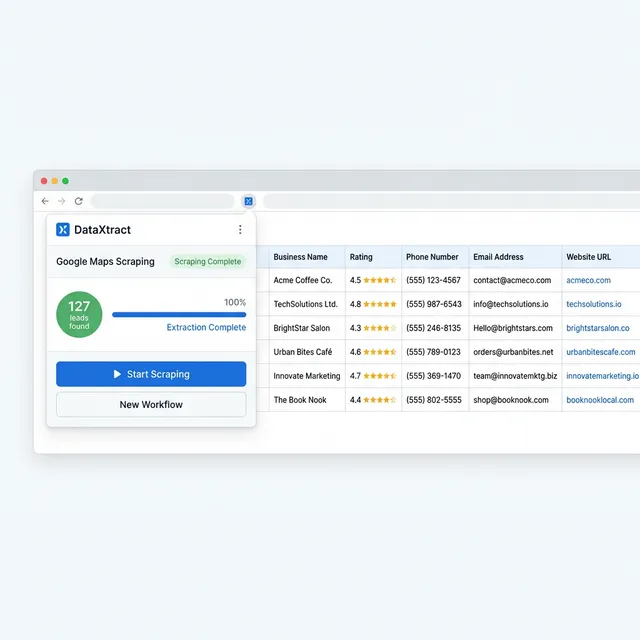
LeadsAgent was built specifically to replace that workflow. It is a browser extension for Chrome and Edge that does the scrolling, clicking, and data collection for you — while you do something else.
How to automate your Google Maps extraction in 3 steps
Install LeadsAgent free — Chrome and Edge
Once it is in your browser toolbar, the process is zero-setup. You don't even need to manually search Google Maps yourself anymore. Just describe what you need, and the agent takes over.
Step 01: Tell us who you want
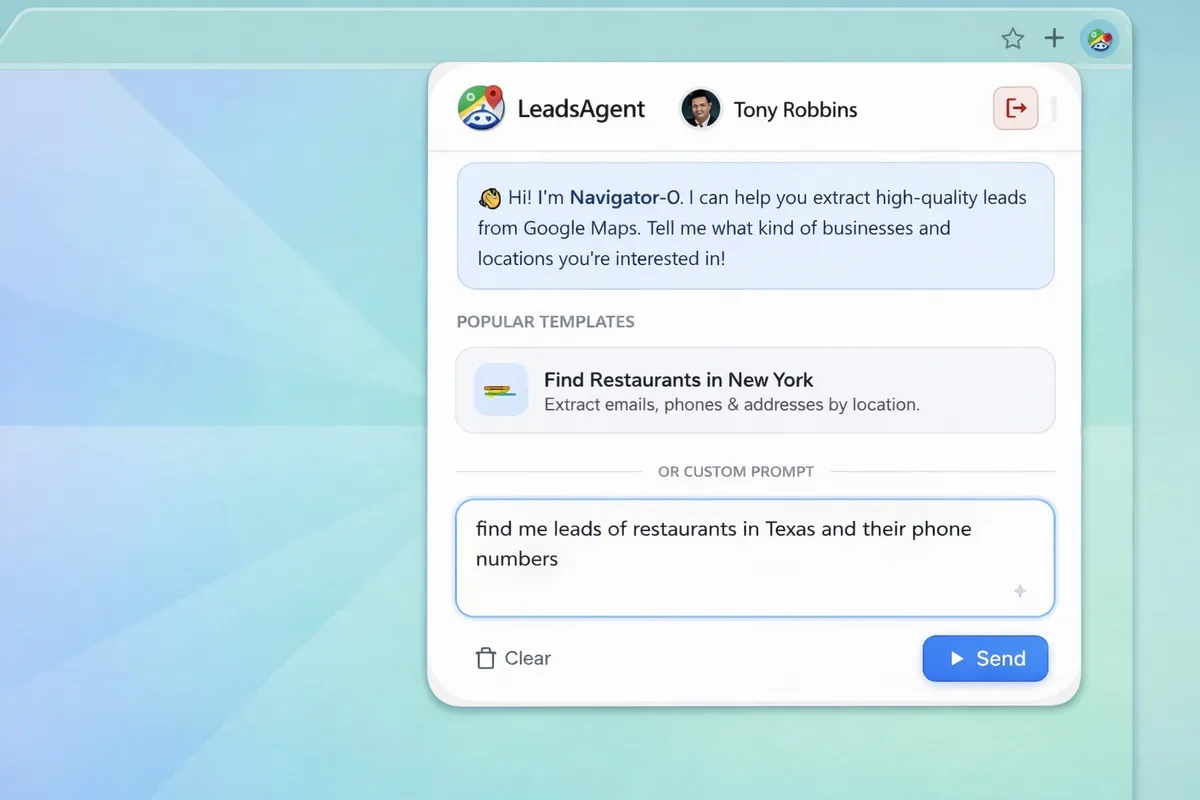
Open the LeadsAgent extension and simply type out what you're looking for — "Restaurants in Manhattan" or "Plumbers in Austin without a website". The narrower and more specific your description, the higher the signal-to-noise ratio in your list.
Step 02: Agent finds & verifies
Press start. The AI works autonomously to scan thousands of listings, visit business websites to find public emails, and extract real contact details. You do nothing while it builds the list in real time with self-sufficiency.
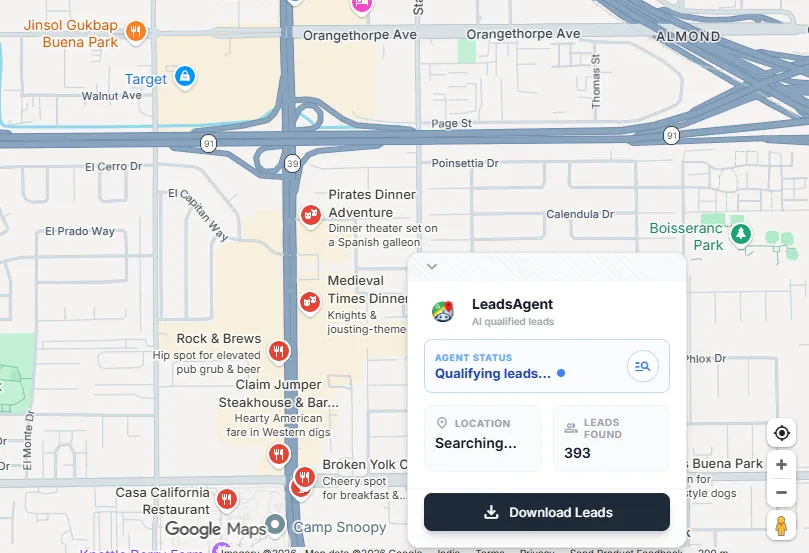
Step 03: Download your leads
When the agent finishes its extraction and verification, click export to get your clean spreadsheet. It includes name, phone, email, website URL, and review data — perfectly formatted and ready to import into your CRM or cold email outreach tool.
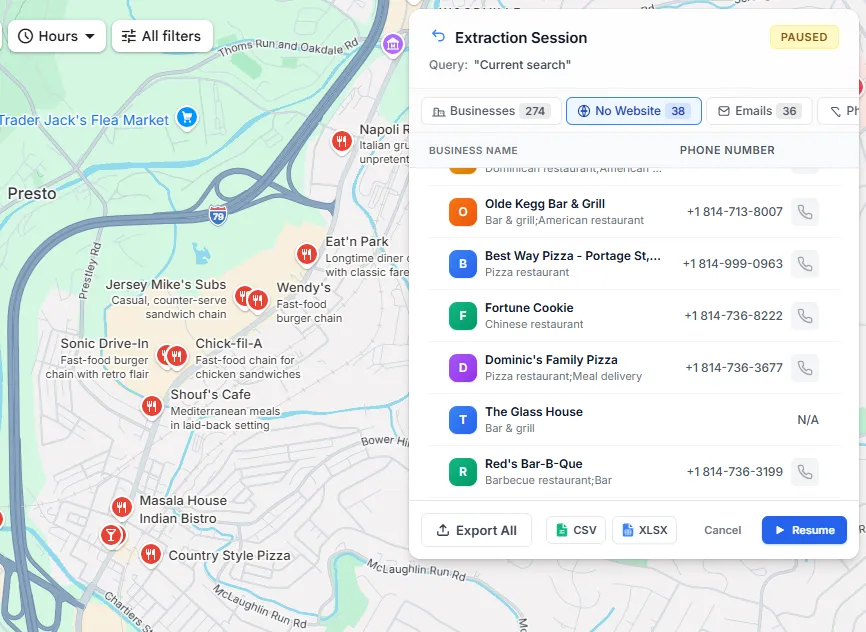
What you actually get in the export
Here is what each row in your CSV contains after a LeadsAgent extraction:
| Field | Coverage |
|---|---|
| Business name | Always |
| Phone number | ~85% of listings |
| Website URL | ~70% of listings |
| Full address | Always |
| Star rating (out of 5) | Always |
| Review count | Always |
| Email address | ~40-60% (from website) |
| Business category | Always |
The email coverage depends on how easy it is to find on the business's own website. It is lower for businesses that only have a Facebook page instead of a proper site.
Four things that actually improve your list quality
Target mid-range ratings, not the highest ones. Businesses with 3.5 to 4.5 stars are well-established enough to afford your service, but still have enough room to grow and problems to solve. The 5-star, 400-review businesses are harder to close — they're usually already working with an agency.
Run the no-website filter. Your export includes a Website column. Filter for blank rows. Those are businesses that show up on Google Maps but have no web presence — ideal if you sell web design, local SEO, or anything digital. They're the warmest market you'll find.
Go narrower on location. Instead of "restaurants in London", try "vegan restaurants in Shoreditch". You get fewer leads, but the personalisation in your outreach becomes much stronger — and the reply rates follow.
Re-scrape every 60 to 90 days. New businesses open constantly. Running the same search three months later surfaces fresh listings that were not there before. Your pipeline refills itself with zero extra research. And for a deeper look at how AI agents make this even faster, the Google Maps scraper agent guide explains the difference.
From list to outreach
Getting the spreadsheet is step one. What you do with it matters just as much.
Once you have your CSV:
- Run the email column through a verification tool (Hunter.io or NeverBounce both have free tiers). Remove anything that comes back as invalid before you send a single email.
- Segment by rating. Higher-rated businesses get a different angle — you are helping them scale something that is already working. Lower-rated ones are often struggling and more open to help.
- Write personalised cold emails that reference their rating, location, and business type. Reference their specific numbers, not generic platitudes. Our cold email templates guide has seven templates built specifically for Google Maps leads — worth reading before you hit send.
For the full process on getting emails from these listings, see our email extraction from Google Maps guide. And if you're focused on B2B rather than local, the B2B lead generation workflow covers the differences.
The numbers, side by side
| Method | Time for 50 leads | Emails included | Cost |
|---|---|---|---|
| Manual copy-paste | Around 2 hours | No | Free (your time) |
| LeadsAgent | Around 3 minutes | Yes (~40-60%) | Free |
| Purchased lead list | Instant | Sometimes | $200-500/month |
The time difference alone is the reason most agencies switch. But the email coverage and data freshness are what make it actually worth running a campaign against.
Install LeadsAgent — 1,000 leads free every month, no card required
If you are running Google Maps campaigns at agency scale, also have a look at our Google Maps scraper guide for agencies — it covers the full weekly workflow from extraction to booked meetings.
And for the statistic that makes the case for no-website targeting: 27% of small businesses have no website in 2026 — that's the data behind your pitch.